



 Custom Branding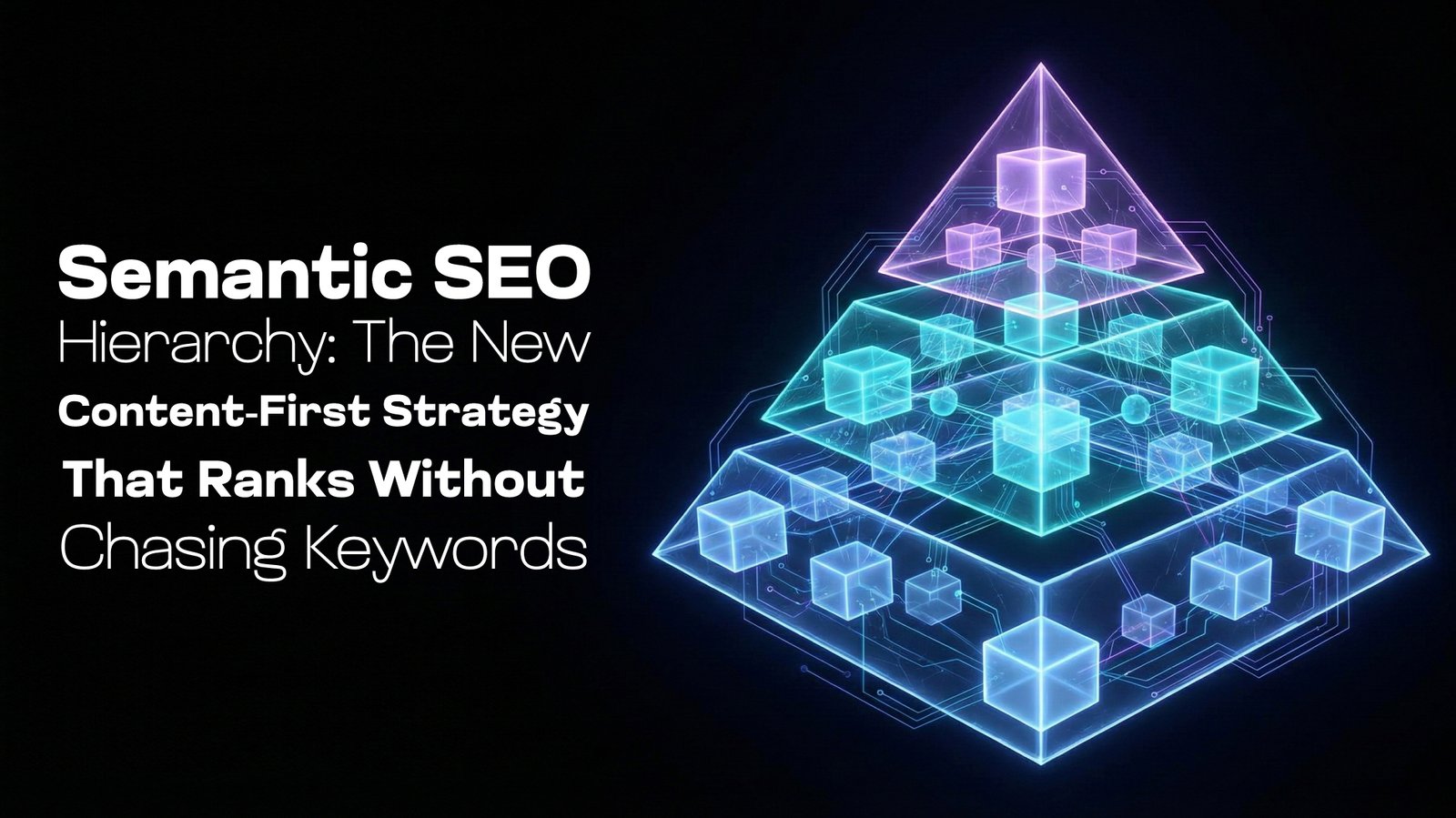
Semantic SEO hierarchy is an emerging type of content first search optimization where relevance and meaning of topic are given more focus than targeting of each single keyword. This approach will be consistent with how modern search engines understand queries and thus ranks higher, appears on more related searches, and more engages without emphasizing keyword difficulty or volume. This method combines semantic associations and general topic coverage, which is in keeping with the advanced assessment standards of the AI-assisted search and generative engines.
Semantic SEO hierarchy is a new model of content-first optimization that fits the current semantic SEO services perfectly which are aimed at ranking without pursuing particular keywords.
Key Takeaways
• Definition Semantic: SEO hierarchy is the arrangement of content based on meaning and context and not isolated keywords.
• Why It Matters: Semantic content meets the needs of different types of queries by looking at the intent, entities, and relationships in the content.
• Some of the main benefits are more ranking options, more features in the SERP, more interaction, and being ready for the future.
• Key Components: Topical clusters, schema data, entity integration and hierarchical content in totality.
• EEAT Signals: Power created by profundity, professional understanding, connectedness, and organized responses.
What Semantic SEO Is and Why It Matters
A Precise Definition
Semantic search engines categorize the meaning of search query. They do not match words but by the meaning of the search and the semantic context of the content. To illustrate, a query such as how to rank content in 2026 is a phrase that generates intent patterns and not keyword patterns. This is the essence of semantic search: not to match word sequences, but to satisfy the need of user information.
Entities and Relationships
Search engines have internal knowledge structures (entities) that are an embodiment of real-world concepts. Semantic SEO plan entails matching the content to those entities and showing the semantic net among them. This increases relevance and accuracy of indexing.
Structured Data
The use of schema markup provides an additional content meaning through the explicit definition of content types to search engines. This helps engines better understand content and can make rich results more visible.
Core Components of a Semantic SEO Hierarchy
Consciously structured and well-organized layers of content are the foundation of a semantic SEO hierarchy, and this is one of the fundamental principles of the effective content marketing services that are based on relevance, intent, and topical authority.
Topical Pillars and Clusters
A pillar page discusses the general subject, and cluster content discusses subtopics, which are linked with one another. This architecture is an indicator of extensive coverage and depth of theme.
Intent-Aligned Content Blocks
Rather than containing content around a single phrase, semantic hierarchy contains all the relevant user intent variations. They are informational (what, why, how), commercial (best/compare) and transactional (tools/services) contexts.
Entity Integration
Association of keywords with familiar concepts (entities) such as tools, techniques, authors or industry standards assists search engines to create a semantic environment.
Structured Schema Markup
Using schema on articles, FAQs, lists, and definitions will help define the purpose of the content and make it stronger in the meaning of the content to both the AI and the traditional search systems.
Benefits of Semantic SEO Hierarchy
Broader Ranking Presence
A semantic hierarchy enables a single piece of content to rank on a variety of related queries, as opposed to a single keyword phrase, and reach and relevancy are enhanced.
Stronger Engagement Signals
Such content that matches different user purposes will have an effect of retaining visitors longer, lowering the bouncing rates and enhancing the time-on-page metrics that are becoming more and more important to search engines.
Rich Search Features and Snippet Eligibility
Using semantic markup and semantic structuring makes it more likely that your content will show up in rich search features like knowledge panels, featured snippets, and more.
Long-Term Stability
Semantic SEO strategies are more resistant to change in an algorithm because they meet the needs of a wider range of information, as opposed to specific keywords. This view emphasizes the process of changing the key-word matching to the concept-understanding in the modern search evaluation. At The Dreamial Marketing Agency , semantic-driven SEO strategies are designed to create sustainable rankings that remain stable through algorithm changes.
Practical Implementation Steps
The steps that can be used to execute a semantic hierarchy are as follows:
Step 1: Intent Mapping
Identify all the user objectives on your topic (informational, commercial, comparative). Put these together in a way that makes sense
Step 2: Topic Pillar Creation
Produce a general introductory article on the topic on a high level. Connect sub topics of this page to descriptions.
Step 3: Subtopic Pages
Make separate pages or sections for each part of the cluster concept, like definitions, comparisons, and case studies. Link back to the pillar.
Step 4: Schema Markup
Use structured data that fits the type of content you have (like an article, FAQ, or list) to make it easier to understand.
Step 5: In-house Linking Strategy.
Make sure that all the related pages have contextual links with one another, enhancing semantic links. This pyramidal arrangement provides definite messages of high topical authority and intent coverage.
Case Example
An article that monitored the performance of SEO after semantic reorganization revealed that semantically relevant pages exhibited much more interactions than the traditional content that was optimized with keywords. The rich content, logical progression, and connectional coverage of the topic helped reduce the bounce rates and increase the dwell time.
The next level of search optimization is Semantic SEO hierarchy where the content meaning and user intent are more important than single matches of the keywords. This approach is consistent with the modern search engines that comprehend language and find answers. It enhances rankings, expands visibility and builds trust by portraying real world informational structures on the form of organized hierarchies of content. Semantic SEO hierarchy is not only effective but also necessary to brands that want to have sustainable search performance.