



 Custom Branding
"Black Hat GEO" was a hot topic on SEO forums and among marketing experts for a long time. It was a digital myth, a dark art that fooled Google into thinking a site was in a different place so that it would change the search results. A lot of people thought it was happening, but it was hard to find out what Google had to say about it. The confirmation is out now, and it's making waves in the world of digital marketing.
Google has said in public that Black Hat GEO is real and bad. These are a group of dishonest ways to change the order of local searches. This confirmation is no small change; This is a clear warning to those who attempt to commit fraud in order to reach the top of search engine results pages (SERPs). Now it is not up to you whether you understand these dangers or not. You need this to protect yourself as AI-powered spam and advanced cloaking methods become more common.
This news might not be good for businesses that depend on real, organic traffic.
What do you do when other people don't follow the rules? How do you keep your brand safe when the rules are always changing? The Dreamial Marketing Agency thinks that the answer is honest, open, and user-focused SEO. This book will tell you what Black Hat GEO is in 2025, how to find it, and most importantly, how to make an SEO plan that can deal with the effects of AI SEO manipulation.
What does it mean to be "Black Hat"? What GEO Really Stands For?
So, what is this digital beast, really?
Black Hat GEO is a set of dishonest SEO techniques that change how relevant a website is to a certain area in search results. The goal is to fool Google into thinking that a site is important to a city, state, or even a country when it really isn't. This lets spammers show up for location-based keywords like "plumber in Miami" even though they don't really work there.
How does it work?
There are a number of dishonest ways that manipulators use: AI-Generated Spam:They use AI to make thousands of bad sites, each with content that is full of keywords and doesn't make sense, that targets a different area.
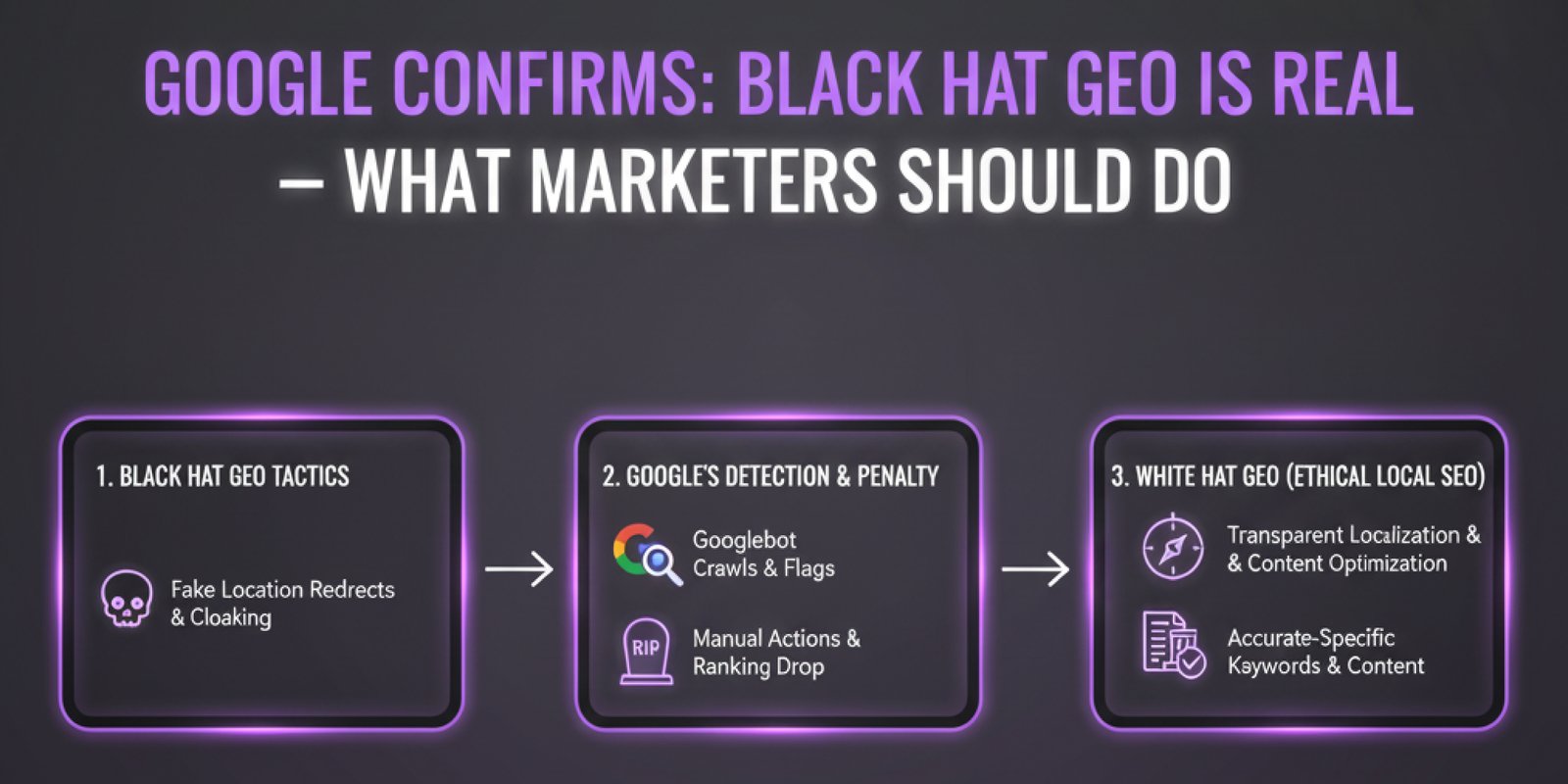
Cloaking by Area: This is a classic example of bait and switch.Google's crawlers see one version of a page, but people in different parts of the world see a different one. For example, Google might show a useful article about the area, but a user might get a page full of spam or links to other sites.
Schema abuse is a real concern: Some folks are using structured data, or schema markup, to feed Google misleading information, like phony reviews or fake addresses for local businesses. This sneaky tactic helps them show up in rich snippets and AI observations. As we head into 2025, many are understandably worried about these practices. The rise of powerful large language models (LLMs) has made it all too easy for spammers to spread these scams far and wide, putting genuine businesses at a disadvantage.
How AI has transformed geo-targeting: ChatGPT has simplified content creation, but it’s also opened the door for AI to manipulate SEO. In the past, teams of writers and developers had to handle everything manually. Now, just a few scripts can do the heavy lifting. As a result, automated content farms that make a lot of pages that are only available in certain places have become more common.
These AI-powered sites often create thousands of doorway pages for each city or area. These pages aren't very deep or useful; they just exist to rank for some keywords. The content is mostly useless and just changes the names of places in a template. For instance, one website might have pages for "best roofers in Austin," "best roofers in Dallas," and "best roofers in Houston," and the text on all of them would be very similar.
Google's main rules say that these strategies are not allowed. Helpful content is meant to give credit to content that was made for people, not for search engines. Google's rules against spam also say that content that has been scraped or made by a computer, as well as cloaking and doorway pages, are not allowed. Google is serious about giving users real, user-first experiences by confirming its crackdown on Black Hat GEO.
The 2025 Black Hat GEO Playbook
The Black Hat GEO plan for today is the best it's ever been.Spammers are using both AI and old-fashioned methods to hurt the integrity of search results in a number of ways. These are the most common ways that people are trying to trick others right now:
AI makes a lot of spam based on where you are: Most people do things this way. There are thousands of pages on spam websites, and each one is about a different keyword, like "near me" or "in [city]." The content is made by a computer program, which makes it hard to read and doesn't help the user at all.
Not true E-E-A-T Signals and Reviews: These spam sites write fake reviews and make fake author profiles with fake credentials to make themselves look real. They pretend to have Experience, Expertise, Authoritativeness, and Trust (E-E-A-T) to fool both Google and people.
Cloaking and content swapping by area: Someone in New York might see a different page than someone in California or even Google's own crawlers. This prevents people who want to mess with things by showing a clean, optimized version to search engines while showing spam, ads, or harmful content to consumers.
Abuse of schema markup for AI observations: As AI observations become more popular, spammers are placing fake structured data on their pages. They can use the LocalBusiness schema with fake addresses or the FAQPage schema to insert spammy links directly into Google's AI-generated answers. A black hat GEO is at its worst when it lies or promotes harmful things. If these people rank well for local search terms that people trust, they can make money or gain political power.
Why you should care: real risks
You cannot ignore how dangerous Black Hat GEO is. It's not good to use these strategies on purpose or by accident, or to be outdone by people who do.
Getting penalized by Google and losing your rankings: All the time, Google's algorithms get better. When GEO spam is found, algorithms or even people may reduce the value of sites.This can make your organic visibility go away overnight.
Trust and credibility in the brand is damaged: If someone clicks on your site to find local information and sees spam that has nothing to do with it, they will never trust you again. This ruins the way people perceive your brand and can be difficult to fix.
Long-term biological visibility is declining: manipulative methods only work for a short period of time. Google is improving its algorithms with its Google SEO upgrade for 2025. Because of this, sites that don't provide real value will naturally drop in their rankings.
How it changes money: When organic traffic suddenly drops, you lose both leads and sales. If you run sponsored ad campaigns, you could also be wasting your money because spammers are competing with you and getting higher rankings.
How to Use GEO-Targeting Fairly in 2025?
You don't have to break the law to fight back against Black Hat GEO. A strong offense based on ethical, White Hat values is the best defense. This is the right way to do it:
Create content that is right and relevant for each area: don't hide it; Instead, create content that is useful for each area you serve. As a roofer in Texas, you should write detailed case studies for jobs in Dallas, Austin, and Houston. Show what you know about your neighborhood.
Make sure the schema and metadata are authentic: Use schema markup to show your business in the best light. If you have a real job, use the LocalBusiness schema with the correct address and phone number. Don't add places where you aren't.
Helpfulness and Transparency of Content: Every page on your site should help people with their questions or problems. Be honest about who you are and what you do. People will trust you more if you have a real “About Us” page and detailed author profiles.
Follow Google's advice: Be careful with Google's rules regarding updates to "helpful content" and "spam." Your plan should be based on delivering real value, not finding ways to get around the rules.
Check your site often: Check your technology and content often to see if there are any issues. Use tools that can crawl your site from different places to make sure that users all over the world see the same great content.
What you need to do next: A plan of action Do you feel like you have too much to do? Don't worry. This is a step-by-step guide to securing your website and boosting your local SEO.
Check your GEO-targeted pages: Check all your pages that are specific to your region. What information is useful and does it vary from city to city? Or are they just a lot of words that mean the same thing?
Prevent AI spam messages: Remove anything that is thin, low-quality, or created by a computer. It's better to have a few good pages than a ton of spammy ones.
How to use schema correctly: Use a tool like Google's Rich Results Test to check your structured data. Check it over to make sure it is correct and has no errors.
Give more power to local authority: You can get real local backlinks by working with other local businesses, sponsoring events in your area, and getting listed in well-known local directories.Check your GEO-targeted pages: Check all your pages that are specific to your region. What information is useful and does it vary from city to city? Or are they just a lot of words that mean the same thing?
Prevent AI spam messages: Remove anything that is thin, low-quality, or created by a computer. It's better to have a few good pages than a ton of spammy ones.
How to use schema correctly: Use a tool like Google's Rich Results Test to check your structured data. Check it over to make sure it is correct and has no errors.
Give more power to local authority: You can get real local backlinks by working with other local businesses, sponsoring events in your area, and getting listed in well-known local directories. Many people think that this process is difficult. To navigate the complex world of modern SEO, you need to be an expert and always be alert. If you work with a dedicated agency you can rest assured that your growth will be both long-term and ethical.
How Dreamial Marketing Agency Keeps You Safe: At Dreamial Marketing Agency we think Google's crackdown on black hat GEOs is a good thing for honest marketers. We base all of our local SEO work on being open and honest and ensuring we get results fairly.
We focus on: Clear local SEO strategies: We create plans for your business based on your goals and the areas you serve. You will always know what we are doing and why.Many people think that this process is difficult. To navigate the complex world of modern SEO, you need to be an expert and always be alert. If you work with a dedicated agency you can rest assured that your growth will be both long-term and ethical.
How Dreamial Marketing Agency Keeps You Safe: At Dreamial Marketing Agency we think Google's crackdown on black hat GEOs is a good thing for honest marketers. We base all of our local SEO work on being open and honest and ensuring we get results fairly.
We focus on: Clear local SEO strategies: We create plans for your business based on your goals and the areas you serve. You will always know what we are doing and why. Many people think that this process is difficult. To navigate the complex world of modern SEO, you need to be an expert and always be alert. If you work with a dedicated agency you can rest assured that your growth will be both long-term and ethical.
How Dreamial Marketing Agency Keeps You Safe: At Dreamial Marketing Agency we think Google's crackdown on black hat GEOs is a good thing for honest marketers. We base all of our local SEO work on being open and honest and ensuring we get results fairly.
We focus on: Clear local SEO strategies: We create plans for your business based on your goals and the areas you serve. You will always know what we are doing and why. Its crawlers can tell the difference between what they see and what customers see, and its algorithms can find patterns in GEO spam.
Can using AI for local SEO harm my site?
It's okay to use AI to help write creative, useful, and high-quality content. On the flip side, cranking out a ton of unfiltered, low-quality spam content with AI goes against Google's guidelines and could land you in hot water. So, how do black hat GEO strategies differ from white hat GEO strategies? Well, White Hat GEO is all about providing real value to users in targeted areas through useful content and credible business information. On the other hand, Black Hat GEO tends to use deceptive tactics like cloaking and spamming to trick search engines into giving them a quick ranking advantage, but let’s face it, that kind of trick usually doesn’t last long.
Looking to prevent GEO-spam from impacting your website? Regularly check your site for any harmful content, ensure your schema is set up correctly, and invest in building a brand that truly benefits people. Avoid cutting corners; it's crucial to stick to Google's webmaster guidelines to the letter.
Will Black Hat GEO still be effective in 2025?
Some sites might see a temporary boost, but with Google's ongoing updates, these strategies are becoming less effective and riskier than ever. The long-term effects, such as being completely removed from search results, are much worse than any short-term benefits.
You don't need to worry that Google confirmed Black Hat GEO. It's a call to do something. This confirms that there is no long-term way to reach the top of the SERPs. Those who put integrity first, provide real value to their audience, and earn their trust will be the ones who decide the future of SEO. Ethically based businesses will continue to perform well, even if unscrupulous people try to get ahead in the short term.Stay aware of what's going on, take action, and never sacrifice your integrity for the slightest increase in your position.
Are you looking for an SEO partner that is honest and follows Google's rules? Call The Dreamial Marketing Agency immediately. We do ethical SEO for you.